
London's Bayeux Tapestry tickets are sold out to 31 December. Exeter's own Norman coins and pottery are on free display at RAMM until 11 July 2027.
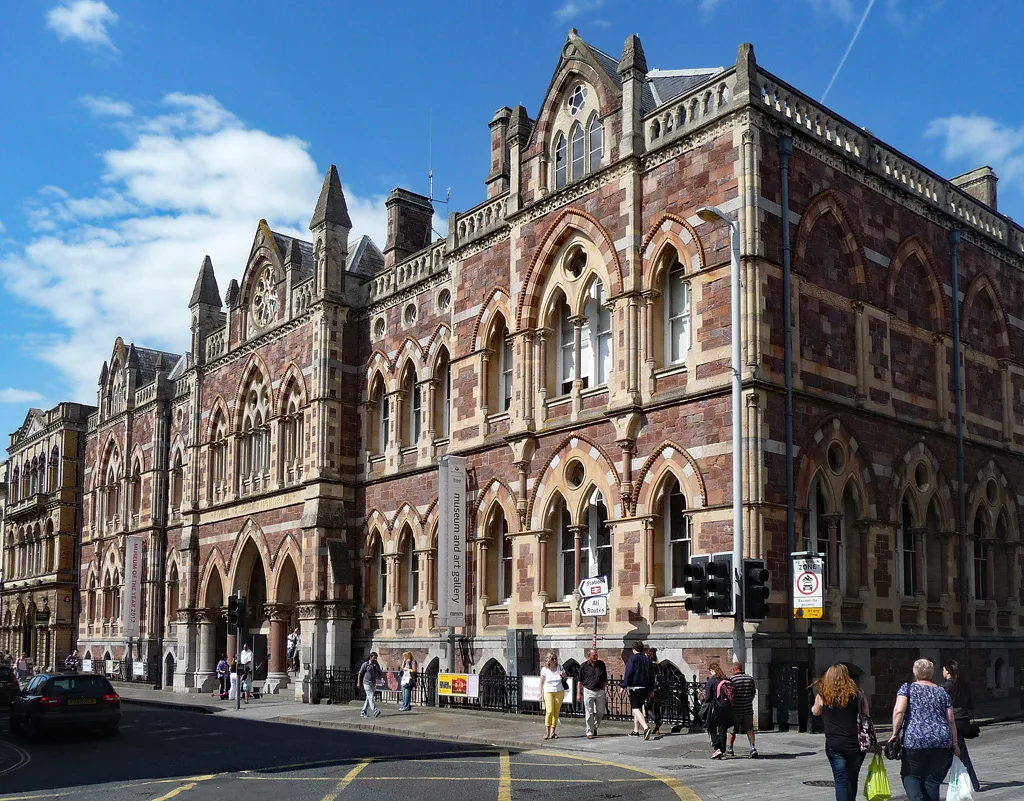
Coins struck in Exeter bearing the faces of Edward the Confessor, Harold II and William I are on public display at the Royal Albert Memorial Museum, as part of the national programme marking the Bayeux Tapestry’s loan to the British Museum.
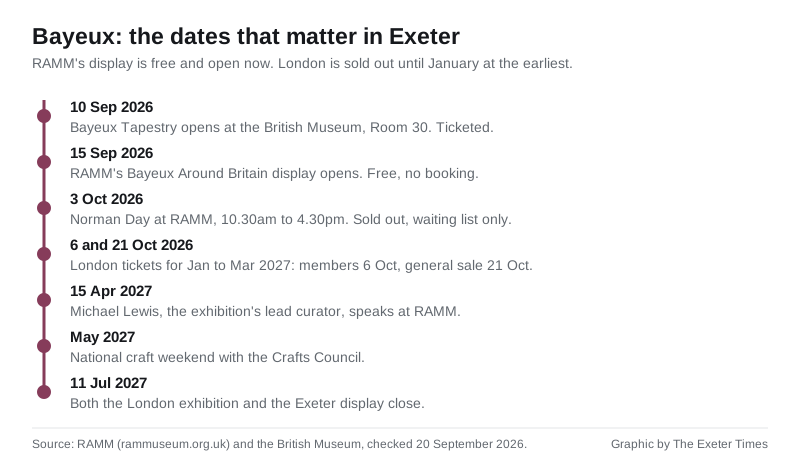
The display opened on 15 September and runs until 11 July 2027, RAMM announced. Entry to the museum is free.
That matters more than it sounds. Tickets to see the tapestry itself in London have sold out for every date from 10 September to 31 December 2026. The next release, covering January to March 2027, goes on sale on 21 October. Members get priority booking from 6 October. Tickets for April to July 2027 will not appear until early next year.
Exeter’s display needs no ticket and no booking, and it closes on the same day the London exhibition does.
What is actually on show
RAMM is showing objects from its own collection, alongside digital material supplied by the British Museum. The display listing sets out what is in the cases:
- coins minted in Exeter showing Edward the Confessor, Harold II and William I, the three main characters of the tapestry
- pottery excavated in Exeter in both Saxon and Norman styles
- pots made by a French potter who was living and working in Exeter before the Conquest
- fragments of the new architecture the Normans brought with them, including a stone column capital carved with Norman soldiers’ heads
The display sits in RAMM’s Viewpoint area, six windows at the rear of the museum store. The museum flags one practical point on its own listing: one of the windows is very close to the ground, so it works for small children but may not be accessible for visitors with limited mobility. Images of the objects and large print captions are available nearby.
The free trail most people will miss
Alongside the cases there is a twelve stop trail through the galleries, hosted on the South West Collections Explorer. It takes about an hour, it is free, and it can be printed before you come.
It is worth doing because the objects are scattered across five galleries rather than gathered in one room. Stops include:
- a Norman corbel carved as a horse’s head, probably from the church at Yarcombe
- spindle whorls found in Exeter, made from the ball joint of a cow leg bone, the tool used to spin the sort of wool the tapestry is embroidered with
- a suit of Japanese samurai armour, used to ask how armour identifies people in the tapestry
- a 4,000 year old cuneiform foundation cone from Girsu, used to ask why rulers commission records of their own works
The trail also contains the most interesting Exeter claim in the whole project. Fragments of cooking pot in the Making History gallery are what archaeologists call Bedford Garage Ware, made between roughly 950 and 1150. They were thrown on a wheel, kiln fired and in some cases glazed, at a time when pottery in the South West was normally handmade, bonfire fired and unglazed. The trail’s own text concludes that the maker was probably a potter who came to Exeter from northern France, and that the kiln stood inside the city walls. It was found in 1935 when the Bedford Garage was built.
In other words, a French craftsman was already at work inside Exeter before William landed.
The Norman Day is full
The event built around the display, Conquered: Norman Exeter and Devon, is on Saturday 3 October at RAMM, from 10.30am to 4.30pm in Gallery 20. It is organised by the Friends of RAMM and priced at £30 standard, £25 for Friends.
It is now fully booked. The museum is asking anyone still interested to contact RAMM reception to go on the waiting list.
Four speakers are listed:
- John Allan, Cathedral Archaeologist, on Norman Exeter
- Professor Ollie Creighton of the University of Exeter, on the Norman impact on the Devon landscape and economy
- Professor Sarah Hamilton of the University of Exeter, on Exeter’s 12th century Martyrology and the Norman impact on the church
- Professor Levi Roach of the University of Exeter, on William’s siege of Exeter in 1068 and his charter to Leofric, Bishop of Exeter
The day includes a visit to the Cathedral Archives to see the Exon Domesday, the working papers for the Domesday Book in the South West. Attendees make their own way between RAMM and the archives.
The other date to keep is Thursday 15 April 2027, when Michael Lewis, lead curator of the British Museum’s Bayeux Tapestry exhibition, gives an in person talk at RAMM.
What the record says about Norman Exeter
Exeter does not appear in the tapestry. It appears in what happened next.
Historic England’s scheduling for the city walls records the sequence plainly: “Following its capitulation to William the Conqueror, it became a Royal town.” The same list entry puts numbers on what survives. The circuit runs roughly 2.35km, and 72 per cent of it, 1,705 metres, is still standing as visible fabric.
RAMM’s own trail is more careful than the popular version of the story. Its note on an Anglo-Saxon cross shaft that once stood near Exeter’s West Gate records a local rebellion against the new Norman regime in 1068, says the city’s walls and gates gave it strong defences, and adds that Exeter “would agree to a peace treaty before fighting broke out”.
The castle William founded on the red rock above the city is in worse condition than anything in the museum. Rougemont Castle has been a scheduled monument since 10 August 1923. It is also on Historic England’s Heritage at Risk Register, and the assessment is bleak. Checked on 20 September, it records:
- condition: very bad
- vulnerability: high
- trend: declining
- priority: A, meaning immediate risk of further rapid deterioration or loss of fabric, with no solution agreed
- ownership: commercial company
So the city is putting its Norman objects in a window while the Norman building itself sits in the worst category the national register has.
Exeter’s place in the national programme
Bayeux Around Britain is run by the British Museum and supported by WorldQuant. The British Museum’s programme page now lists more than 70 museums and heritage sites taking part, and claims that over two thirds of the UK is within an hour’s drive of a Bayeux Tapestry event. RAMM’s own announcement, published five days earlier, put the figure at more than 60.
Devon has two partners on that list: RAMM in Exeter and The Box in Plymouth. Eight sites across the South West are taking part in all.
A national celebration of craft, run with the Crafts Council, is planned for a weekend in May 2027.
Cllr Lucy Findlay MBE, Exeter City Council’s lead for City and Culture, said: “Exeter has a unique connection to the story told by the Bayeux Tapestry, and this display offers a wonderful opportunity to explore that history through objects from RAMM’s collection. It’s especially encouraging to see young people helping to curate the exhibition and interpret our heritage for new audiences.”
Those young people are named in the museum’s announcement. Four Museum Reps, Conan Esson, Harry Gibbs, Alex Lake and Octavia Madden, chose the objects and wrote the interpretation with curator Thomas Cadbury. RAMM’s Skills Development programme is paid work experience for full-time university students.
What it means for you
If you want to see anything connected to the Bayeux Tapestry this autumn without paying or booking, RAMM is the option. London is closed to new visitors until January at the earliest.
- Where: Royal Albert Memorial Museum, Queen Street, Exeter EX4 3RX. Exeter Central station is 100 metres away; St David’s is about a 15 minute walk. The Guildhall Shopping Centre and Mary Arches car parks are the nearest, and Queen Street is one way. See our guide to parking in Exeter.
- When: closed Mondays. Tuesday 10.30am to 5pm, Wednesday to Sunday 10am to 5pm. The display runs to 11 July 2027.
- Cost: free. The trail is free too.
- The 3 October Norman Day: sold out. Ring or email RAMM reception on 01392 265858 to join the waiting list.
- If you want London: the January to March 2027 release opens on 21 October 2026, and British Museum members can book from 6 October. Check train times to London before you commit to a timed slot.
More things to do locally are in our Exeter what’s on guide.
Sources: RAMM news release, 15 September 2026; RAMM display listing; Conquered: Norman Exeter and Devon; Bayeux Around Britain trail; British Museum, The Bayeux Tapestry; British Museum, Bayeux Around Britain; Historic England list entries 1003858, 1003866 and Heritage at Risk 5197265.
Have your say